West Side Story

Welcome to Lyric's learning resources!

This is your all-access pass to the world of opera and musical theater. Scroll down to access the following resources to help you learn more.

Overview
Musical Highlights
Historical and Cultural Timeline
The Authors
 

Overview

This Google Slides presentation covers essential information your students need to know about the opera. 

Musical highlights

“Prologue”

Played by the Orchestra

0:00 /0:00
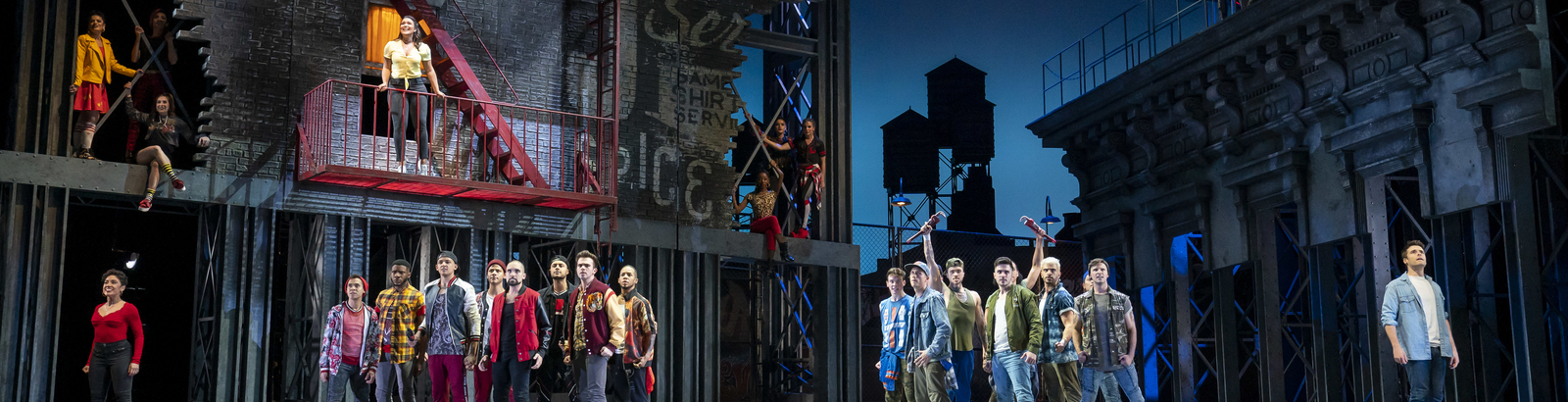
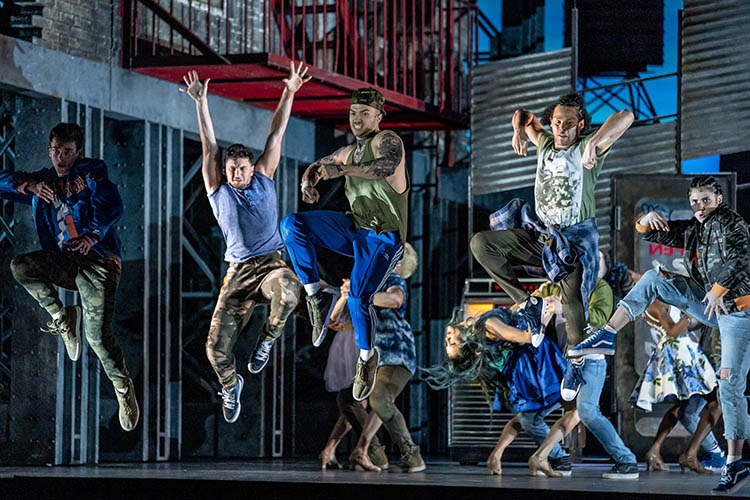
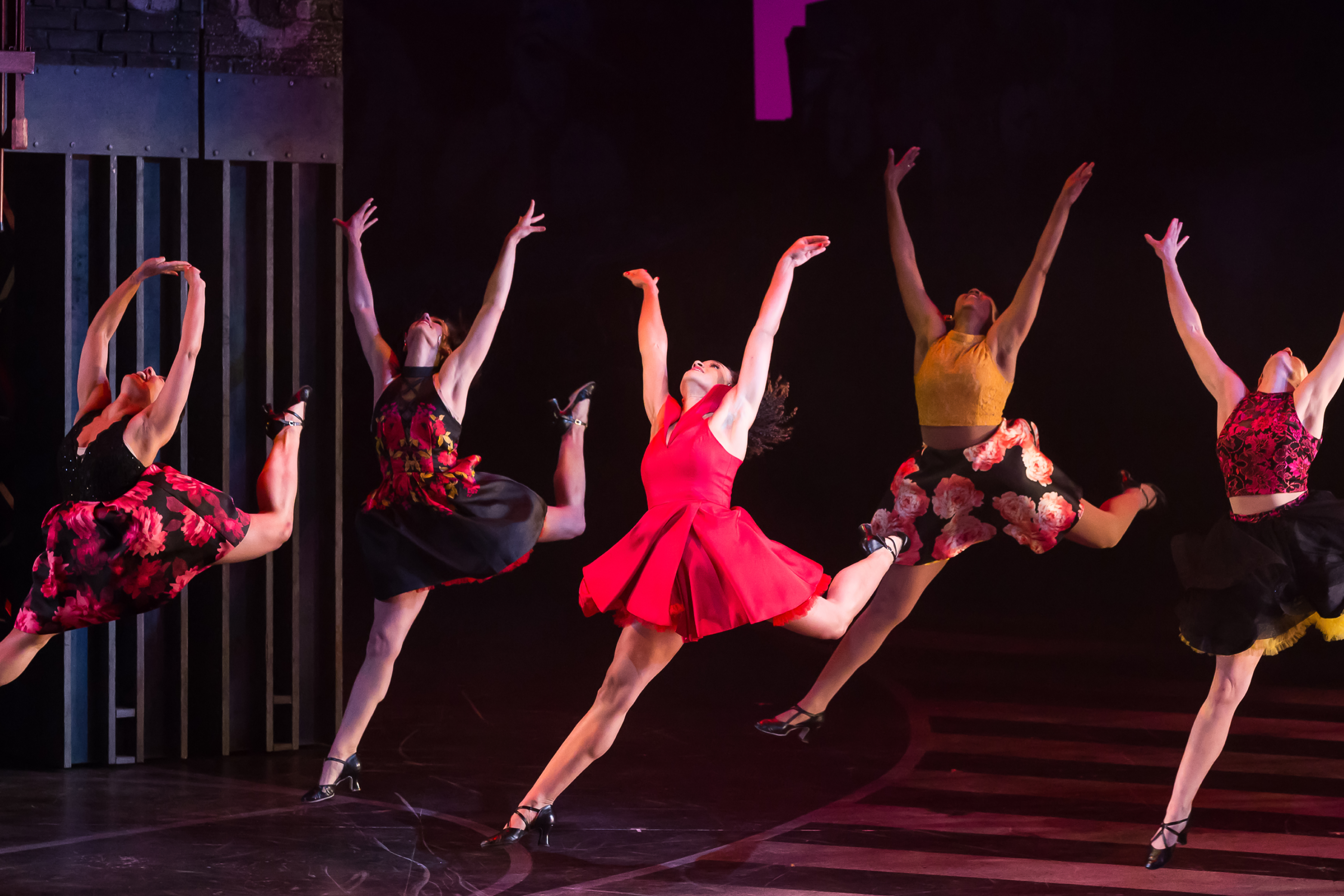
The musical begins softly with the prologue. You are immediately introduced to the sound world of the musical with jazz harmonies, syncopated rhythms (rhythms that emphasize music in off-beats), and snapped fingers. Usually during a prologue (or an overture) nothing happens on stage. In West Side Story, you see dancing immediately as you are introduced to the rival gangs the Sharks and the Jets.

Things to listen for:
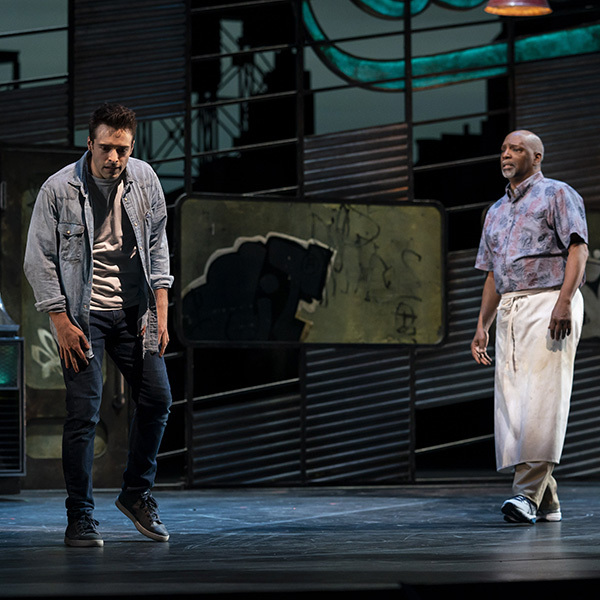
  • The music at the beginning evokes the sound of careful footsteps interrupted with abrupt stops. You see the gangs on stage, and the music paints a similar picture.
  • When the snapping happens, on what beat does it occur?

“Something’s Coming”

Sung by Tony

0:00 /0:00

Riff has just tried to convince Tony that he should come to the dance to help the Jets confront the Sharks. Tony is reluctant. He’s working and thinking about his future, a future that might not involve the Jets at all. 

Things to listen for:
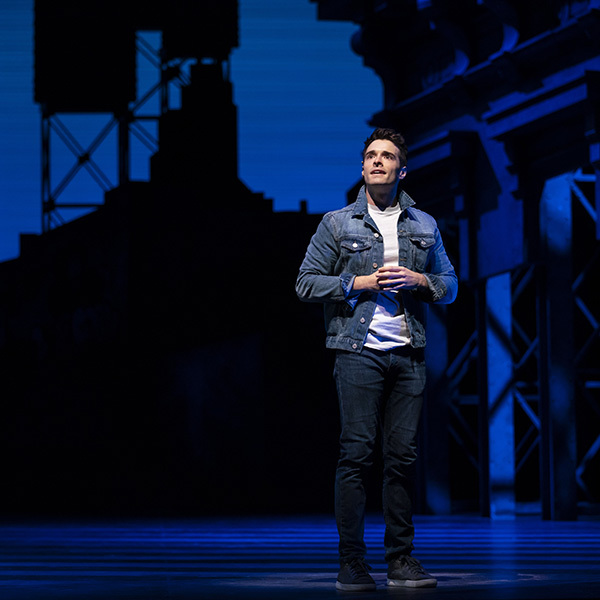
  • The woodwinds hint at the music to come. They play the same rhythm and melody that Tony will later sing.
  • This song is mostly in triple meter. It’s hard to tell based on the melody, but you can hear three beats per measure if you listen to the string basses and bass clarinets.

“Maria”

Sung by Tony

0:00 /0:00

Tony goes to the dance, where he meets Maria. She’s the sister of Bernardo, the leader of the Sharks. Despite being connected to rival gangs, it’s love at first sight. In an introspective moment, Tony sings of the beauty of Maria, the person and the name.

Things to listen for:
  • Tony begins singing and then stops to think about the name, how it sounds, what it means. At this moment he’s not singing “Maria,” but a choir of voices, presumably in his head, is proclaiming her name.
  • When Tony sings “Ma-ri-a” the interval between “Ma” and “ri” is called a tritone (or a diminished fifth). This combination of notes, or interval, is particularly dissonant (that is, if played together or one after the other, the notes create an edgy and uncomfortable sound). In this song, the dissonance on the tritone is resolved up one half step. This upward motion turns the tritone into a perfect fifth, which is within the key and not dissonant at all. So, very quickly (and often in this song) Bernstein is alternating between melodic tension and resolution.

“Tonight”

Sung by Maria and Tony

0:00 /0:00

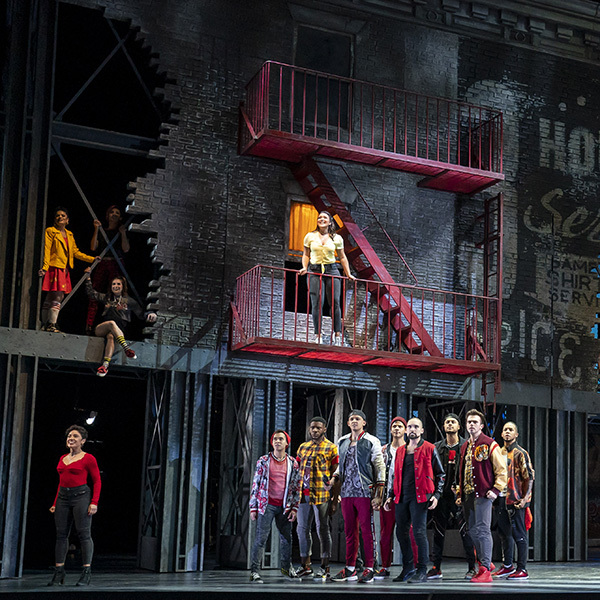
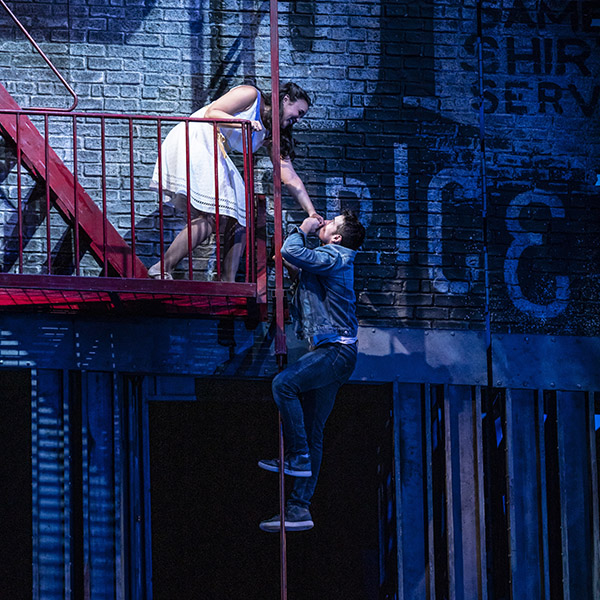
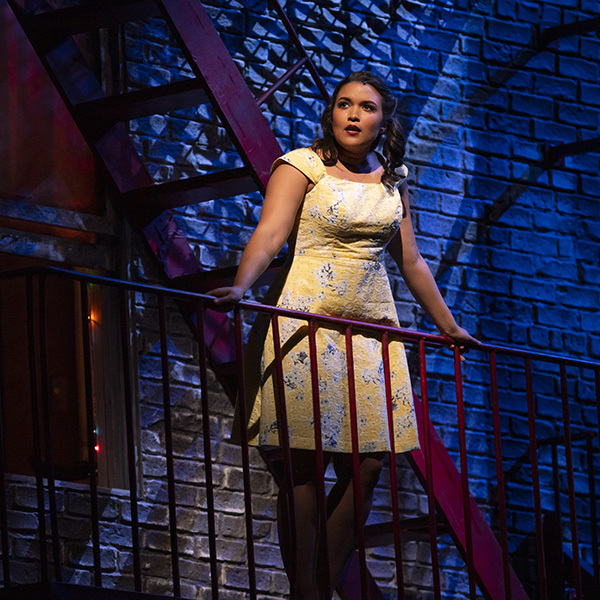
Since the musical is loosely based on Romeo and Juliet, it also requires a balcony scene. The “balcony” in West Side Story happens to be a fire escape outside of Maria’s bedroom. At this point in the duet, Tony and Maria sing in unison. Their voices and their dreams for the future combine. 

Things to listen for:
  • The rhythm for the sung melody is simple with only quarter notes, half notes and whole notes. There are some rhythmic variations in the accompaniment, though. What are some of the different rhythms that happen in the orchestra?
  • The duet is full of symbolic language. They both sing about celestial bodies, such as space, suns, and moons. Given the connection to Shakespeare, why do you think Sondheim chose these words?

“America”

Sung by Anita, Rosalia, and the women of the Chorus

0:00 /0:00

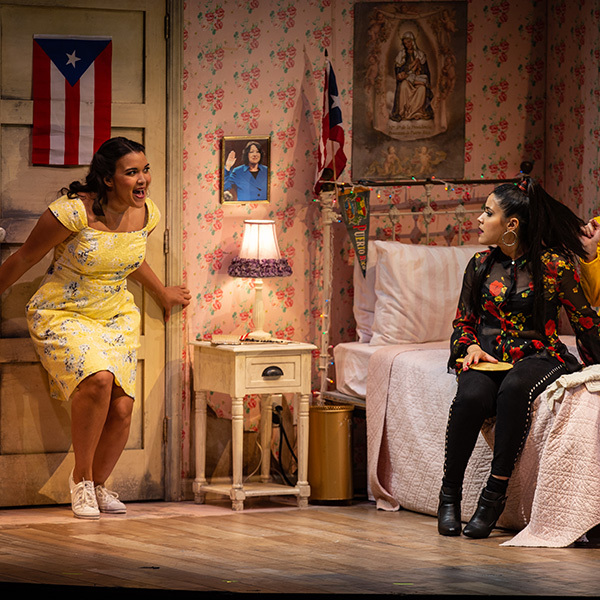
The Sharks’ girlfriends are divided. Half of them, including Maria’s best friend Anita, love living in America and New York City. The other half miss Puerto Rico, the city of San Juan, and their families. 

Things to listen for: 
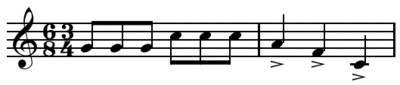
  • In this “America”, the rhythm and emphasis of the beat changes every measure. Here is how this looks written out:
  • While each measure is the same length (that is, six eighth notes). The pitch and note length changes both alter the musical emphasis. This shift between two groups of three beats and three groups of two beats is called a hemiola. Why do you think Bernstein chose to have this song frequently alternate between time signatures?
  • At the beginning of this excerpt, it sounds like the girls are all singing the same melody. They almost are, but Anita is singing a countermelody to the chorus that is slightly lower and rises and falls in different ways.

“Tonight” (Quintet and Chorus)

Sung by Tony, Maria, Riff, Anita, and Chorus (Sharks and Jets)

0:00 /0:00

This version of “Tonight” expands on the earlier balcony scene. This ensemble number builds to the emotional climax of the show. Maria warmly sings of love. Riff persuades Tony to fight (and Tony reluctantly agrees). Anita prepares for a romantic evening with Bernardo. Both the Sharks and Jets are revving up for a rumble. Emotions are high for everyone.

Things to listen for: 
  • Both the Jets and Sharks sing the same words to a similar melody. They both claim that the opposing gang started the feud, and both pledge to end it. Along with the musical similarities, are the two gangs that different?
  • At the beginning Tony responds to Riff with hesitation. He doesn’t want to be part of the fight. Later, when he doubles Maria, he sings passionately. Tony is confident in his love for Maria and hopeful for his future with her.

“I Feel Pretty”

Sung by Maria, Francisca, Consuelo, and Rosalia

0:00 /0:00

This is the beginning of Act Two, and the girls don’t know what happened in the rumble. Maria sings to express excitement for her love of Tony. Her friends have never seen her like this before. They also think she is singing about loving Chino. 

Things to listen for: 
  • Maria’s friends are amused by Maria’s newfound infatuation. Their responses to Maria are shorter and separated. They don’t match the flowing melody of their friend. What do you think this difference indicates?
  • This song features some instruments to emphasize the Puerto Rican heritage of the girls. In addition to the string section and the winds you’ll hear guitar and tambourine.

“Somewhere”

Sung by Maria

0:00 /0:00

Riff and Bernardo are dead. Tony is a murderer and he and Maria are scared. They want to flee, but where can they go? This song accompanies a ballet that depicts the dreams of a better life they both yearn to have.

Things to listen for: 
  • Compared to the other examples, this song is rhythmically simpler. It is in one time signature (4/8 time in duple meter) and the melody is on the beat (without syncopation).
  • The orchestra is supportive of the melody without multiple layers of countermelody and differing rhythms. The instrumentation is mostly strings with winds playing only occasionally. Why do you think Bernstein and Sondheim decided for this piece to have this accompaniment?

Publishing rights to West Side Story secured through arrangement with Universal Music Publishing Group.

Use of the Original Broadway Cast Recording licensed by Sony Music Entertainment.

Historical and cultural timeline

Learn more about this opera and events in the world at the time it was written.


The authors

Click to learn more about each artist!


Photos: Todd Rosenberg, Lyric Opera of Chicago